
The Island Series: Position
Welcome to the Family
The Quiet Nudge Toward Belonging
Over the years, God has used small moments to nudge me toward deeper reflection. It might be a conversation, a question, or a story that stays with me longer than I expect. One of those moments came from watching two families we know walk two very different but beautiful paths: fostering and adoption.
A number of years ago, our neighbors across the street fostered a series of children over several years. Each child carried a sad story of neglect. They needed the safety and stability our neighbors’ home temporarily provided.
A few years ago, two of our dearest friends allowed us to come alongside them on their journey to adoption. One of my most powerful memories of this journey was the opportunity my wife, son, and I had several years ago to join them at an adoption finalization hearing. The presiding judge was warm, but precise with statements like,
“Do you understand that once this decree is entered, this child has all the same rights as if born to you biologically?” and
“Do you understand that adoption is a permanent, lifelong commitment?”
It was a beautiful, emotional experience that ended with a final question,
“What name would you like the child to assume?”
They entered court as prospective adoptive parents and left as a family. No longer were there temporary titles for mom and dad, or adoptee labels for the children. They were simply family.
Adoption brings a new name, a new identity, a new future. It says, “You are ours, and you always will be.”
To be clear, both fostering and adoption are beautiful. Both reflect the heart of God. But for the children, the difference is dramatic.
One gives you a home for a season. The other gives you a family forever. One offers care. The other offers identity.
A child may appreciate foster care, but they dream of adoption.
What every child hopes for in adoption is exactly what God gives us in Christ: not just temporary care, but deep and lasting belonging. This is our position as children of God, co-heirs with Christ.
This is where Biblical flourishing begins. This is where the Island journey begins.
Adoption as Son‑Placement: The Identity That Changes Everything
Scripture doesn’t describe our relationship with God as a trial period or a spiritual foster placement. Paul uses a much stronger word, one that carried enormous weight in the ancient world: huiothesia, literally meaning “son-placement.”
So, when Paul says God adopted us, he isn’t talking about sentimentality. He means a legal change: being placed into the status of a son or daughter with full inheritance rights.
In the Roman world, adoption wasn’t primarily about infants. It was about heirs. Adoption meant:
a new name
a new family
a new inheritance
a new legal standing
a new identity
Once the adoption was finalized, the new standing was secure. The old life was legally gone.
This is the word Paul chooses.
“You have received a Spirit of adoption as sons, by whom we cry, ‘Abba! Father!’” Romans 8:15–17
“God sent forth His Son… so that we might receive adoption as sons.” Galatians 4:4–7
Paul is saying: You’re not “trying out” Christianity. You’re not being evaluated. You’re not earning your place at the table.
It’s all grace, not performance.
The Island Parallel: The Old Man’s Village and the Climate of Belonging
It is the same on the island.
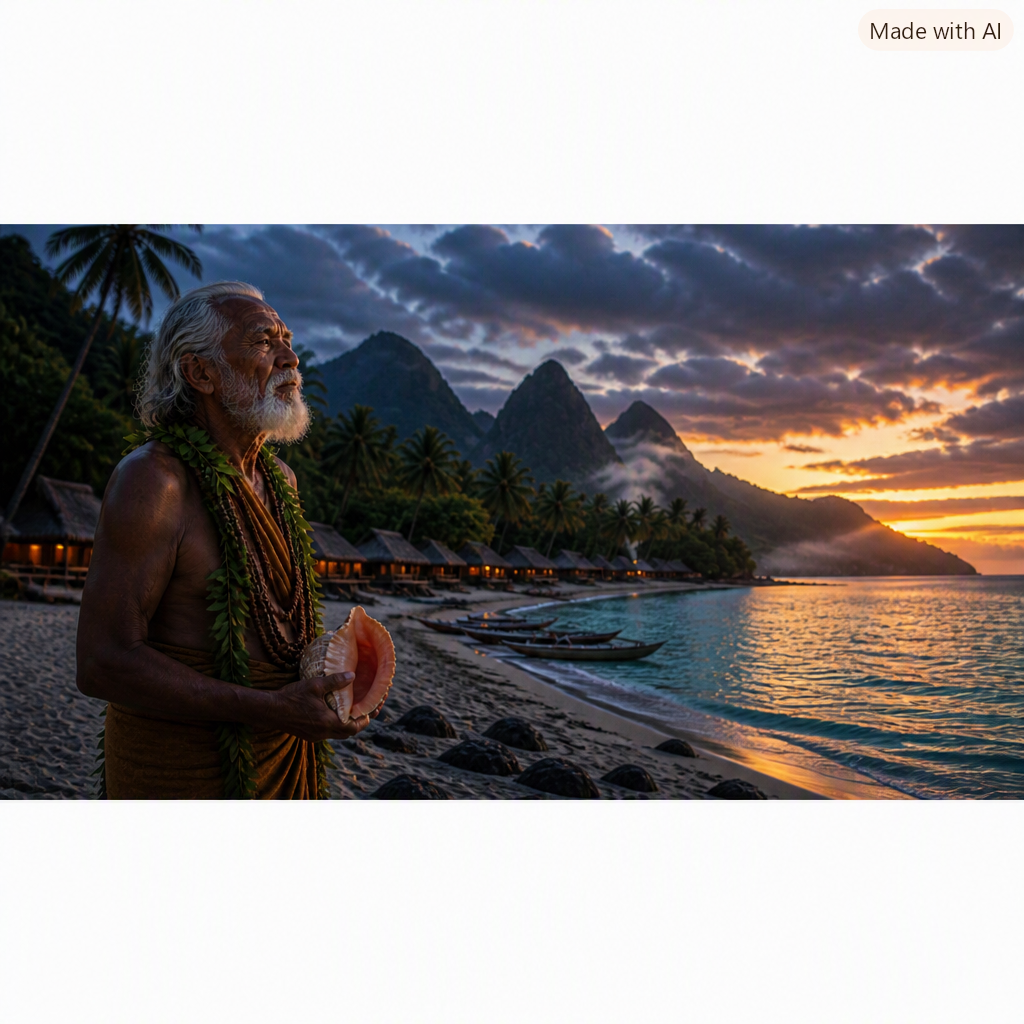
The villagers on the Bay live in a climate shaped by the old man’s presence: warm currents, abundant fruit, fresh water, daily rhythms of peace, and the steady call of the horn each morning and night.
The children know they belong. They run to the old man without hesitation. They sit under the banyan tree and listen to his stories. They help with his boat. They live in a climate of welcome.
They are not guests. They are not temporary. They are not evaluated. They are not on probation.
They are placed and positioned in a family, in a village, in a story.
This is huiothesia. This is Position.
But not everyone lives from that climate.
Some villagers left the Bay for the far side of the Island, convinced they could find brighter skies and better futures on their own terms. They traded abundance for deprivation, warm currents for cold waters, and belonging for self-determination.
Others stayed physically close but moved into caves high in the mountains, living in fear, suspicion, and spiritual frost. They were near the Island’s heart, but far from the old man’s presence.
Both groups forgot their position. Both groups forgot their belonging. Both groups forgot the old man’s heart.
Just like the two sons in Jesus’ parable.
Two Sons. One Father. One Home. Two Climates.
The younger son leaves because he believes he can find life, pleasure, and freedom apart from the Father. He wants independence more than intimacy, and he assumes he can find flourishing on his own terms.
The older son stays physically near his father, but his heart remains distant. He continues to live as if his performance is the pathway to favor.
Both assume they must secure for themselves what the Father freely offers.
But the father addresses both with the same truth: “You are always with Me, and everything I have is yours.”
The father’s embrace doesn’t restore a lost identity; it reveals this truth the sons never fully trusted.
On the Island, the old man maintains the daily pattern of blowing the horn, lighting the torches, and watching the horizon for those who left to return.
His heart toward his children remains steady, gracious, and welcoming.
The villagers stopped living in that reality.
This is the heart of huiothesia. This is the foundation of flourishing. This is Position.
Why Adoption Matters Today
Many believers live like foster children in God’s house: cared for, but not convinced they belong.
They pray like guests. They worship like visitors. They walk with God as if He’s evaluating them instead of embracing them.
They fear messing up. They fear disappointing God. They fear being spiritually “sent back.” They fear that belonging is fragile.
But adoption means God’s welcome is rooted in His grace, not your performance.
And yet, so many Christians carry these same tendencies.
“If I perform well, I’ll be accepted.”
“If I’m strong, God will use me.”
“If I obey, I’ll be loved.”
This script is very human, but it is not the gospel.
The gospel says you are not tolerated, on probation, a temporary guest. You do not have to earn your place.
Very much the opposite! You are placed by grace as a son or daughter.
Far too often the foster-child mindset creates a climate of anxiety: constant self-monitoring, fear of rejection, spiritual perfectionism, emotional distance, and relational guardedness.
An adopted-child mindset creates a climate of flourishing: rest, trust, presence, joy, and obedience that comes from love, not fear.
This is why so many believers feel spiritually exhausted. They are trying to flourish in the wrong climate.
You cannot flourish where you do not feel you belong. You cannot receive the feast until you trust your place at the table. You cannot walk the Island until you know where you stand.
Identity is not the reward for discipleship. Identity is the starting point of discipleship.
This is Position: the climate of belonging that makes every other movement possible.
Practicing Belonging
First, practice each of these three simple prayers this week:
The Name Prayer: Take 30 seconds and pray: “Father, thank You that I am Your child.”
Sit Like a Son/Daughter: Sit for one minute with your hands open. Pray: “I belong to You.”
The Doorway Pause: Each time you walk through a doorway today, whisper: “I’m not a guest in Your presence.”
Second, read Luke 15:20 three times today … and tomorrow. Lean into the Father’s embrace and recognize your identity as a child of God.
Our Father didn’t just rescue us; He welcomed us into His family.
In His Fields, Jon