
The Island Series: Posture
Which Way Are You Facing?
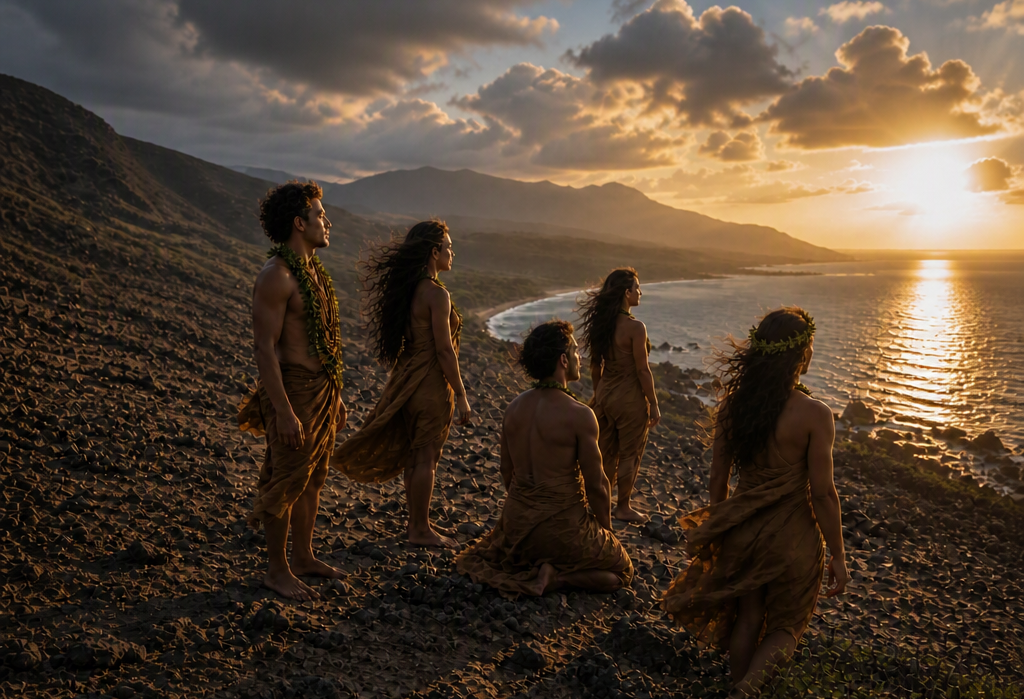
How the Posture of the Heart Shapes the Climate of the Soul
Have you ever visited Oʻahu? My wife grew up in Kaneohe, on the island's windward side. It’s a place full of rainforests and green valleys. The air feels alive. Clouds hang on the mountains, and rain comes and goes softly. Everything grows and flourishes there.
Honolulu is only about ten miles away, just a short drive, but it’s on the leeward side, which is much sunnier and drier. The difference is striking. Same island, same sun, same ocean, but very different climates.
The difference isn’t about distance. It’s about direction.
Posture.
Let me explain. When mountains meet moist winds, you get two climates: one side is lush, the other is dry. Oʻahu shows this clearly because you can see the change in just a short drive. This happens on many islands because of the orographic effect, when land forces moist air upward.
Here’s how it works:
Moist air approaches a mountain range. Prevailing winds push air from the ocean toward land.
Air ascends the windward slope. As it climbs, the air expands and cools, and water vapor condenses into clouds and rain.
Rain falls on the windward side. This side becomes lush and green.
Dry air descends on the leeward side. After losing moisture, the air warms as it sinks, creating a rain shadow or a dry region behind the mountains.
Windward land faces the wind, so moist air rises, cools, and brings rain. Leeward land turns away, so air sinks, warms up, dries out, and creates a rain shadow.
The same is true of the human heart.
Some hearts turn toward the Spirit: open, receptive, and humble. Others turn away: blocked, dry, and self-focused. Same Spirit, same grace, same Father, but a different climate.
This is what posture means: the direction you face shapes the climate of your soul.
Facing the Wrong Way
On the website’s homepage, you will find something I wrote called “In His Fields,” where I share a story. I am going to repeat a part of it here.
Years ago, during a difficult season in our church, our interim pastor asked the dwindling Sunday night congregation to stand in a circle. With only a hundred people in a sanctuary built for more than a thousand, it was easy. We spread out, formed a circle, and waited for him to speak.
He stepped into the center, slowly looked around at each of us, and said, “You are facing the wrong way.”
We froze.
We were all facing inward, which is what people usually do in a circle. But his words hit me hard. Too often, the church turns inward, focusing on comfort, preferences, and protecting ourselves. We build spaces and programs that serve us more than the Great Commission. We look at each other instead of reaching out. We stay in our comfort zones instead of following our calling.
But the truth is even more personal: We can find ourselves facing the wrong way.
Posture isn’t about your position. It’s about what you are facing. That direction shapes the climate of your heart.
Windward Hearts, Leeward Hearts
Jesus said the Spirit is like the wind (John 3:8). The Spirit is always moving and working. Grace is always flowing, and God’s presence is always close. But not everyone experiences Him the same way.
Some lives are lush. Some are dry. Some are warm. Some are frozen.
The difference isn’t about God’s faithfulness. It’s about the posture of our hearts.
The Younger Son: Leeward and Dry
IJesus told a story that shows posture clearly: the parable of the Prodigal Son (Luke 15:11–32). Viewed through the lens of spiritual climate, the story takes on new meaning.
The younger son turns away from the father.
“He gathered everything and went to a distant country.” (v13)
He chooses independence, self-determination, and his own desires. The climate of his life changes.
“No one was giving anything to him.” (v16)
He becomes spiritually leeward—blocked, dry, starving, and alone. It’s not that the father stopped loving him, but that he turned away from the source of warmth.
Island Parallel: The Villagers Who Left for the Far Side
In The Island, I write about a group of villagers who did the same. They grew tired of the daily drizzle and the old man’s warnings. They wanted brighter skies, self‑determination, and a life without the old man’s counsel.
So, they left.
They traded warm currents for colder waters. They traded lush valleys for arid grasslands. They traded abundance for deprivation.
Their land became dry, with little grass and not enough to live on.
They weren’t far from the old man’s heart, but they were facing the wrong direction.
They thought the Bay was the problem, but really, it was their posture.
The Turning Point: A Windward Pivot
Then the younger son shifts.
“He came to his senses…” (v17) “I will get up and go to my father…” (v18) “So he got up and came…” (v20)
He changes direction, faces home, and opens himself to grace.
And right away, the climate changes.
“His father saw him… felt compassion… embraced him…” (v20) “Bring the best robe… ring… sandals…” (v22) “They began to celebrate.” (v24)
The son’s famine becomes a feast. The distance he had created becomes an embrace.
He didn’t earn the change in climate. He simply changed his posture.
What Blocks the Wind?
For the justified believer, sanctification begins the moment we receive grace.
But many of us still carry our old toys - habits, sins, coping mechanisms - tucked behind our backs. We often hide them, except when we “take them out to play.”
We may think God is near, but we don’t always turn fully toward Him. Sadly, this is true for many Christians today.
We are close, but not truly connected. We are near, but not surrendered. We are aware, but not abiding.
We live spiritually leeward, facing the wrong way. Self-reliance, unconfessed sin, wounds we’ve never surrendered create a posture that says, “I’m fine on my own.”
These things create a spiritual rain shadow that blocks the grace, warmth, and nourishment of God’s presence.
But when we turn toward God, the climate of our hearts starts to change.
Repentance opens our hearts. Surrender softens us. Humility puts us in the right place. Worship warms us. Stillness helps us receive Him. Obedience brings us into alignment.
This is the moment we leave the toys behind, climb onto the Father’s lap, and allow Him to guide and direct our lives.
The Father creates the plan. Jesus initiates the plan. The Spirit faithfully administers the plan.
Posture is the pivot that makes it possible to become close to God. flourishing possible.
Turning Windward Today
First, take time this week to repeatedly practice each of these three prayers:
Offer a daily “Windward Prayer” saying, “Father, turn my heart towards You.”
When you are prompted to turn leeward, stop for an Open Hand Moment. Sit quietly with open hands and say, “I leave my toys behind. Lead me.”
Each time frustration, hurry, or fear rises, pause and ask: “Which way am I facing?”
Second, read Luke 15:17–20 three times today and let the younger son’s pivot inform your posture.
The Spirit is waiting for us to turn our hearts toward Him. He will send His warmth, His light, and His provision. He will give us grace, making us open, humble, and ready to share His grace with others.
In His Fields, Jon